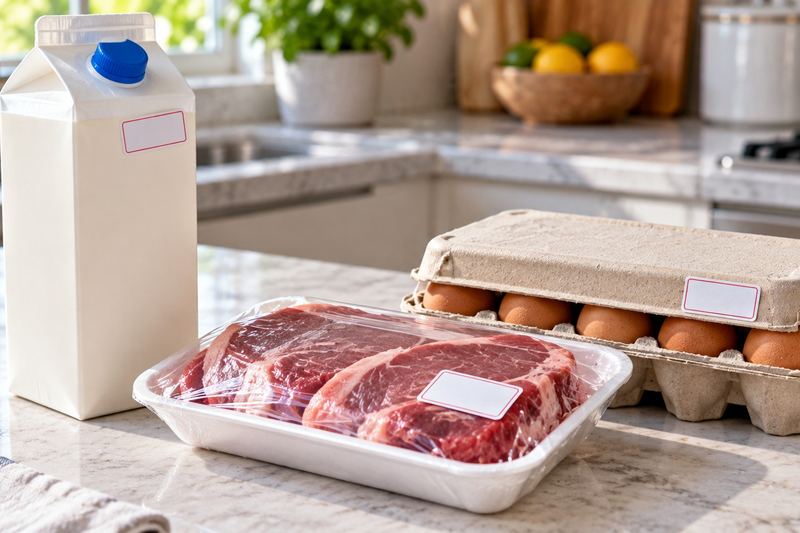
To tell if meat is bad, check smell and feel first: a sour or off odor, a slimy or sticky surface, or ground beef that is gray or brown all the way through are signs of spoilage, says USDA FSIS. A gray center alone is normal. Bacteria that cause illness give no signs, so follow storage times too.
Key facts
- Spoiled meat has an off odor, a slimy, sticky or tacky surface, or an off texture; FSIS says not to use it.
- Ground beef that is red outside and grayish-brown inside is normal: oxygen doesn't reach the center.
- Color change alone is not proof of spoilage, and color can't tell you if cooked meat is done.
- Pathogens such as Salmonella and Listeria can't be seen or smelled, so follow fridge times: 1–2 days for raw ground meat and poultry, 3–5 days for steaks, chops and roasts.
- When in doubt, throw it out. Never taste meat to test it.
How to tell if meat is bad: the three checks
Meat has gone bad when it smells sour or "off," feels slimy or sticky, or shows widespread discoloration together with one of those signs. These changes come from spoilage bacteria. USDA's Food Safety and Inspection Service (FSIS) describes spoilage as an off odor, flavor or texture, and says food that has developed those traits should not be eaten.
- Smell it. Fresh raw meat smells mild. A sour, rancid, ammonia-like or sulfur smell that hits you when you open the package is the most reliable home sign.
- Touch it. Fresh meat feels moist but firm. A slimy film, or a tacky surface that stays on your fingers, means bacteria have been growing on it.
- Look at it, but don't rely on color alone. FSIS notes that fresh meat fades or darkens for harmless reasons. Color matters most when it comes with smell or slime, or when a whole package of ground meat has turned gray or brown.
Then check the calendar. If the meat has been in the fridge longer than the times in the table below, or sat out more than 2 hours, discard it even if it looks and smells fine.
Why bad meat isn't always obvious
The bacteria that make meat smell bad are usually not the ones that make you sick. FSIS separates two groups: spoilage bacteria, which lower quality and cause odors and stickiness but generally don't cause illness, and pathogenic bacteria such as Salmonella, Shiga toxin-producing E. coli, Campylobacter, Listeria monocytogenes and Staphylococcus aureus, which you can't see or smell.
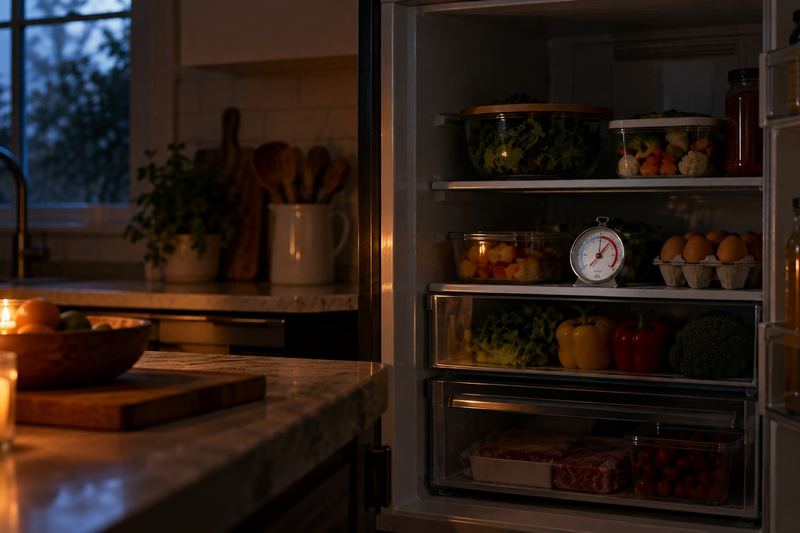
That means a sniff test can only catch spoilage. Meat can smell fine and still carry pathogens, especially if it was kept above 40°F (4°C) or left out. Your protection is handling: keep the fridge at 40°F or below (see what temperature a refrigerator should be), use or freeze meat within the storage times, and cook it to its safe internal temperature.
How long does raw meat last in the fridge?
Raw ground meat and poultry keep 1–2 days at 40°F (4°C) or below; whole cuts of beef and pork keep 3–5 days. Frozen at 0°F (−18°C), meat stays safe indefinitely, though quality declines over time.
| Raw meat | Fridge at 40°F (4°C) | Freezer at 0°F (−18°C), best quality |
|---|---|---|
| Ground beef | 1–2 days | 3–4 months |
| Ground turkey | 1–2 days | 3–4 months |
| Chicken and turkey parts | 1–2 days | 9 months (whole birds 1 year) |
| Steaks and beef roasts | 3–5 days | 4–12 months |
| Pork chops and roasts | 3–5 days | 4–12 months |
| Raw sausage | 1–2 days | 1–2 months |
| Deli meat, opened | 3–5 days | 1–2 months |
Package dates are about quality, not a hard safety cutoff; FSIS says meat handled properly should stay wholesome past the date until spoilage is evident. See food expiration dates for what each label means.
How to tell if ground beef is bad
Ground beef is bad if it smells sour or rancid, feels slimy or sticky, or the whole package has turned gray or brown, inside and out. Brown or gray in the center only is normal.
Why is ground beef gray or brown inside?
It's an oxygen effect, not spoilage. FSIS explains that the red color of meat comes from myoglobin, a protein in muscle. When myoglobin meets oxygen it forms oxymyoglobin, which is bright cherry red. Oxygen only reaches the surface of a package of ground beef, so the inside stays purplish or turns grayish-brown. Over longer exposure to light and air, myoglobin oxidizes to metmyoglobin and the surface browns too.
Ground beef color chart
| What you see | What it usually means |
|---|---|
| Bright red surface | Fresh; myoglobin exposed to oxygen |
| Purplish red (vacuum pack) | Normal; meat hasn't been exposed to air |
| Gray-brown inside, red outside | Normal; oxygen didn't reach the center |
| Brown surface, normal smell | Oxidation from air and light; check the date and smell |
| Gray or brown all through the package | FSIS says it may be starting to spoil |
| Any color plus sour smell or slime | Spoiled; throw it out |
Hamburger meat is the same product, so the same checks apply. Cook ground beef to 160°F (71°C) and check with a thermometer; FSIS warns that you can't judge doneness by color (see ground beef temperature).
How to tell if chicken is bad
Raw chicken is bad if it has a sour or off odor, a slimy or sticky surface, or gray or greenish patches. Normal raw poultry ranges from bluish-white to yellow, FSIS says, depending on breed, diet and exercise, so pale or yellow skin is not a warning sign by itself.
Chicken that smells like rotten eggs or sulfur has an off odor and shouldn't be used. Ground turkey and turkey parts follow the same rules: sour smell, slime and gray-green color are signs it has gone bad.
What color should cooked chicken and turkey be?
Safely cooked poultry can be white, tan or even pink. FSIS explains that oven gases, smoking or grilling can leave a pink ring near the surface, and the bone in young chickens can darken; neither is a safety problem. Turkey legs and thighs are dark meat and look darker inside than breast meat. The only reliable test is 165°F (74°C) in the thickest part, measured with a thermometer (see chicken breast temperature and how to use a meat thermometer).
How to tell if steak is bad
Steak is bad when it smells sour, feels slimy or tacky, or has green, gray or brown discoloration along with an off smell. A steak or roast that darkens in the fridge is not spoiled by that alone; FSIS says the darkening comes from oxidation of myoglobin. Vacuum-packed beef looks purplish until it's opened and exposed to air.
Steak is cooked to a minimum of 145°F (63°C) with a 3-minute rest; see the steak temperature page for doneness colors and temperatures.
How to tell if pork is bad
Raw pork is bad if it smells sour or ammonia-like, feels slimy, or has turned gray or greenish. Fresh pork's normal color is grayish-pink, according to FSIS, so a light color isn't a problem on its own.
What does bad pork smell like?
Spoiled pork has a sour, rancid or ammonia-like smell that's noticeable as soon as you open the package. If you're unsure whether a smell is normal, treat it as a reason to discard. Cured meats such as ham can show a rainbow sheen or grayish-green tint from light and oxygen; FSIS says the sheen doesn't affect safety, but combined with a bad smell or slime it means the meat should go.
What temperature does meat spoil at?
Meat doesn't spoil at one exact temperature, but bacteria grow fastest in the danger zone between 40°F and 140°F (4°C and 60°C). That's why raw and cooked meat shouldn't sit at room temperature for more than 2 hours, or 1 hour when it's above 90°F (32°C). See how long food can sit out.
Questions people ask
Is ground beef bad if it's brown inside?
Not necessarily. FSIS says ground beef that is red outside and grayish-brown inside is normal because oxygen doesn't reach the center. If the whole package is gray or brown, or it smells sour or feels sticky, throw it out.
Can you cook meat that smells a little off?
No. FSIS says meat with an off odor, a sticky or tacky surface, or a slimy texture should not be used. Cooking isn't a way to rescue it.
Can meat be bad without smelling bad?
Yes. Pathogens such as Salmonella and Listeria don't change the smell or look of meat, which is why FSIS storage times matter even when meat seems fine.
How long does meat take to spoil at room temperature?
Treat raw or cooked meat left out more than 2 hours (1 hour above 90°F) as unsafe. FSIS says bacteria multiply rapidly between 40°F and 140°F, often before you'd smell anything.
How can you tell if deli meat is bad?
A slimy film, sour smell, or gray or green color means it has spoiled. Use opened or deli-sliced meat within 3–5 days even if it looks fine.