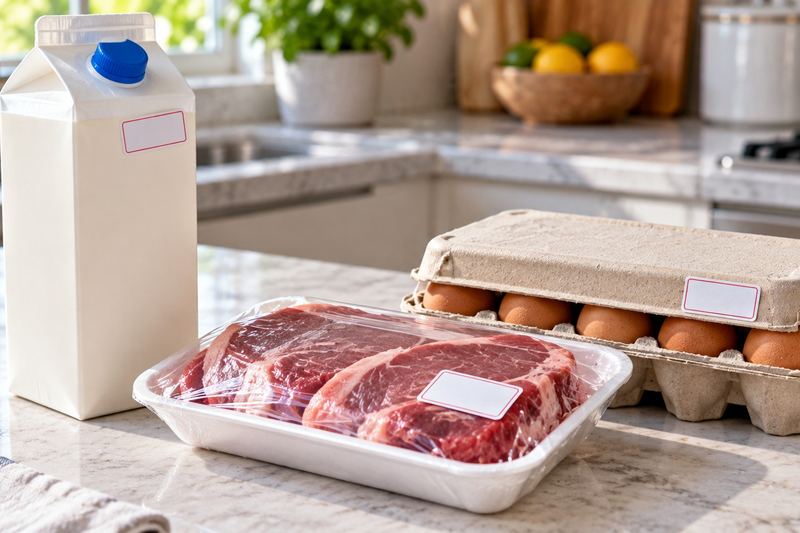
Without power, a closed refrigerator keeps food safe for about 4 hours. A full freezer holds its temperature about 48 hours, or 24 hours if half full, as long as the door stays shut. After 4 hours without power, FoodSafety.gov says to discard perishable refrigerated food such as meat, poultry, fish, eggs, milk and leftovers.
Key facts
- Fridge: about 4 hours of safe cold with the door closed.
- Freezer: about 48 hours if full, about 24 hours if half full, door closed.
- Discard perishable refrigerated food that has been above 40°F (4°C) for more than 2 hours.
- Thawed freezer food can be refrozen if it still has ice crystals or is at 40°F or below.
- Never taste food to decide if it's safe. When in doubt, throw it out.
How long is food good in the fridge without power?
Food in a refrigerator stays safe for about 4 hours without power if you keep the door closed, according to FoodSafety.gov. After that, discard perishable food: meat, poultry, seafood, eggs, milk, soft cheese and leftovers. Each time the door opens, cold air escapes, so resist checking.
The more precise test is temperature. FoodSafety.gov's power outage chart says to discard perishable refrigerated items that have been held at or above 40°F (4°C) for more than 2 hours. That's why an appliance thermometer matters: if the fridge still reads 40°F or below when the power returns, the food inside is safe even if the outage ran past 4 hours.
How long does food keep in the freezer without power?
A full freezer keeps food frozen safely for about 48 hours, and a half-full freezer for about 24 hours, if the door stays closed. A packed freezer works like a block of ice: frozen items keep each other cold. University of Connecticut Extension, following USDA advice, suggests grouping frozen foods together so they stay cold longer.
| Appliance | Safe time without power (door closed) | Target temperature |
|---|---|---|
| Refrigerator | About 4 hours | 40°F (4°C) or below |
| Full freezer | About 48 hours | 0°F (−18°C) or below |
| Half-full freezer | About 24 hours | 0°F (−18°C) or below |
What if the power was out for 8 hours, or 55?
After an 8-hour outage, perishable refrigerated food should be thrown out unless an appliance thermometer shows the fridge stayed at 40°F or below. Freezer food is usually still fine at 8 hours. After 55 hours, even a full freezer is past its expected 48 hours, so check each package: refreeze anything that still has ice crystals or reads 40°F or below, and discard the rest of the perishables.
What food to throw out after a power outage
Throw out perishable refrigerated food that has been above 40°F (4°C) for more than 2 hours. FoodSafety.gov's chart sorts fridge items into discard and keep:
| Discard if above 40°F for over 2 hours | Usually OK to keep |
|---|---|
| Raw or cooked meat, poultry and seafood; thawing meat | Hard cheeses, processed cheese, grated Parmesan in a can or jar |
| Deli meat, hot dogs, bacon, sausage, opened canned meat or fish | Butter and margarine |
| Milk, cream, sour cream, yogurt, soft and shredded cheese | Uncut fresh fruit, opened fruit juice, dried fruit |
| Shell eggs, hard-cooked eggs, egg dishes, custards, quiche | Peanut butter, jelly, mustard, ketchup, pickles, olives |
| Cooked pasta, rice and potatoes; casseroles, soups, stews, gravy | Soy, barbecue, Worcestershire and hoisin sauces; vinegar-based dressings |
| Pizza with toppings; cut fresh fruit and vegetables; pre-washed greens | Bread, rolls, tortillas, cakes, muffins, bagels |
| Opened creamy dressings and opened spaghetti sauce; refrigerated dough | Uncut vegetables, fresh mushrooms, herbs |
The chart treats mayonnaise, tartar sauce and horseradish separately: discard them if they were above 50°F (10°C) for more than 8 hours. For everything, also discard anything that smells, looks or feels wrong, or that feels warm to the touch. See how to tell if meat is bad, but remember that bacteria that cause illness don't always change how food smells.
Can you refreeze food after a power outage?
Yes, if it still contains ice crystals or is at 40°F (4°C) or below. FoodSafety.gov says partly or fully thawed food in that state can go back in the freezer, though some items lose texture or flavor. Food that has been above 40°F for more than 2 hours follows different rules by type:
| Frozen food | Still has ice crystals | Above 40°F for over 2 hours |
|---|---|---|
| Meat, poultry, seafood, soups, stews | Refreeze | Discard |
| Casseroles, frozen meals and entrees | Refreeze | Discard |
| Milk, eggs out of shell, soft cheese, cheesecake | Refreeze (some texture loss) | Discard |
| Ice cream, frozen yogurt | Discard | Discard |
| Vegetables | Refreeze (may lose texture) | Discard after 6 hours above 40°F |
| Bread, rolls, muffins, plain cakes; flour, nuts | Refreeze | Refreeze |
| Hard cheese, juices, packaged fruit | Refreeze | Refreeze (discard fruit with mold, a yeasty smell or slime) |
Meat that's still icy can be refrozen or cooked right away. For the general refreezing rules outside a power outage, see can you refreeze thawed meat.
How to keep a fridge and freezer cold during an outage
Keep both doors closed as much as possible; that's the single most important step. University of Connecticut Extension lists USDA's other steps:
- Keep appliance thermometers in both. The fridge should read 40°F (4°C) or below and the freezer 0°F (−18°C) or below. Without them, you're guessing when the power comes back (see what temperature a refrigerator should be).
- Freeze containers of water ahead of time. Quart-size bags or small containers of ice help keep food cold. Leave room for expansion.
- Use dry ice or block ice for long outages. About 50 pounds (23 kg) of dry ice keeps a fully stocked 18-cubic-foot freezer cold for about two days. Follow the seller's handling instructions.
- Have coolers ready if the power will be out more than 4 hours, and move perishables into them with ice.
- Don't store food outside in snow or ice. Sun can warm it and animals can get to it.
- Put thawing meat on a tray so juices don't drip onto other food.
Before a storm, UConn Extension also suggests freezing leftovers, milk and fresh meat or poultry you won't need right away. See how to freeze meat.
Freezer cold but refrigerator not cold?
If your freezer works but the fridge section is warm, the food safety rule is the same as an outage: check the fridge with an appliance thermometer. If it has been above 40°F (4°C) for more than 2 hours, discard perishable items from the chart above. Move what you can into the freezer or a cooler while the appliance is repaired. Diagnosing the fault itself is a job for the manufacturer or a technician.
What to do when the power comes back on
- Check the appliance thermometers before opening anything else.
- If the fridge is at 40°F or below, the food is safe. If not, sort perishables with the chart and discard those above 40°F for more than 2 hours.
- Check freezer items one by one for ice crystals or a reading of 40°F or below, and refreeze those.
- Discard anything with an unusual odor, color or texture, or that feels warm.
- Never taste food to test it. When in doubt, throw it out.
Then check the remaining food's normal storage times at food storage; leftovers, for example, still need to be eaten within 3–4 days (see leftovers).
Questions people ask
How long can a refrigerator go without power?
About 4 hours with the door closed. After that, FoodSafety.gov says to discard perishable refrigerated food unless a thermometer shows it stayed at 40°F or below.
How long can a freezer go without power?
About 48 hours if it's full and 24 hours if it's half full, with the door closed.
Are eggs safe after a power outage?
Not if they were above 40°F for more than 2 hours. FoodSafety.gov lists fresh shell eggs, hard-cooked eggs and egg dishes as discard items.
Can I keep cheese and butter after a power outage?
Hard cheeses, processed cheese, butter and margarine can be kept. Soft and shredded cheeses should be thrown out if they were above 40°F for more than 2 hours.
Can I cook food that thawed during the outage?
If it still has ice crystals or is at 40°F or below, you can cook it or refreeze it. If it was above 40°F for more than 2 hours, discard perishables such as meat and poultry.