Perishable food can sit out for no more than 2 hours, or 1 hour if the air is above 90°F, such as at a summer picnic. After that, USDA says to throw it out. The reason is the temperature danger zone, 40°F to 140°F, where bacteria can double in as little as 20 minutes.
Key facts
- 2-hour rule: refrigerate perishable food within 2 hours of cooking or taking it out of the fridge.
- Above 90°F (32°C), the limit drops to 1 hour.
- Danger zone: 40–140°F (4–60°C).
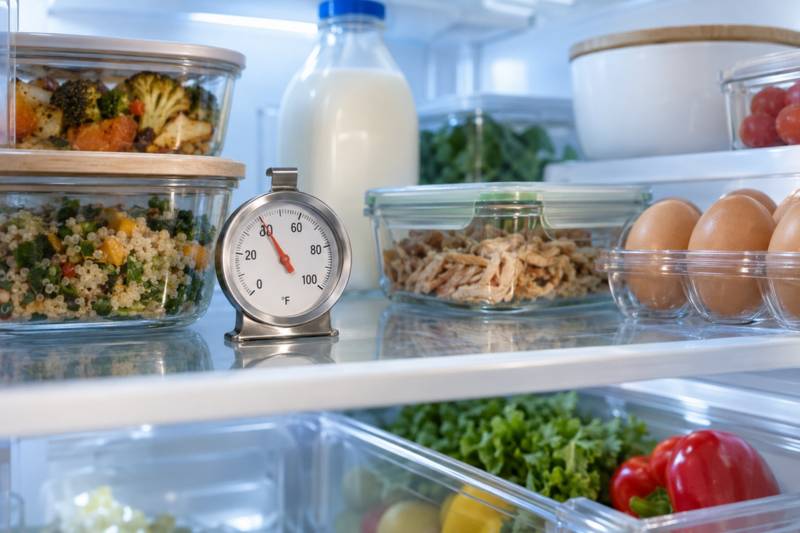
- Keep hot food at 140°F or above and cold food at 40°F or below while serving.
- Reheating doesn't make food safe after it sat out too long; toss it.
How long can food sit out?
USDA's Food Safety and Inspection Service (FSIS) and FoodSafety.gov give one rule for nearly everything perishable, raw or cooked: 2 hours at room temperature, 1 hour when it's above 90°F. That covers meat, poultry, seafood, eggs, dairy, cooked rice and pasta, cut fruit and most leftovers. The clock covers the whole time food is out: cooling on the stove, sitting on the table and riding home from a party.
Once food passes the limit, don't put it back in the fridge "to be safe," and don't count on reheating. Nebraska Extension notes that some bacteria, such as Staphylococcus aureus, can form a heat-resistant toxin that cooking can't destroy, so the safe call is to throw it out.
What is the temperature danger zone?
The food temperature danger zone is the range from 40°F to 140°F (4°C to 60°C). FSIS warns that bacteria can double in number in as little as 20 minutes when perishable food sits in that range. Below 40°F, growth slows; at 140°F and above, hot food can be held safely.
That's why the rule has two halves: keep cold food cold (40°F or below) and hot food hot (140°F or above). Food in between is on the clock.
| Threshold | °F | °C | What it means |
|---|---|---|---|
| Fridge limit | 40°F | 4°C | Bottom of the danger zone; keep cold food at or below this |
| Hot day | 90°F | 32°C | Above this, food can only sit out 1 hour |
| Hot holding | 140°F | 60°C | Top of the danger zone; keep hot food at or above this |
| Reheating leftovers | 165°F | 74°C | Reheat leftovers to this, checked with a thermometer |
Which hot-held food is in the danger zone?
Any food held below 140°F. A slow cooker set to "warm" that has drifted to 120°F, a tray of wings in a cooling oven, or a pot of chili on a turned-off burner are all in the danger zone even though they feel warm. Check with a food thermometer; see how to use a meat thermometer.
What does "room temperature" mean for food safety?
People search for room temperature in Celsius and Fahrenheit, but the food safety rules don't depend on an exact number. Ordinary indoor temperatures fall well inside the 40–140°F (4–60°C) danger zone, so the 2-hour rule applies to any normal kitchen, dining room or office. The only temperature cutoff that changes the clock is 90°F (32°C): above that, you get 1 hour. To convert other readings, use the temperature converter.
How long can eggs, meat, rice and other foods sit out?
The specific foods people ask about all follow the same 2-hour rule (1 hour above 90°F). What differs is how long they keep once they're back in the fridge:
| Food | Max time out | Fridge time at 40°F |
|---|---|---|
| Raw eggs in the shell | 2 hours | 3–5 weeks |
| Hard-boiled eggs | 2 hours (1 above 90°F) | 1 week |
| Cooked meat and poultry | 2 hours (1 above 90°F) | 3–4 days |
| Raw chicken, ground meat | 2 hours (1 above 90°F) | 1–2 days |
| Cooked rice | 2 hours (1 above 90°F) | 3–4 days |
| Cooked pasta | 2 hours (1 above 90°F) | 3–4 days |
| Milk | 2 hours (1 above 90°F) | About 1 week after opening |
| Leftover pizza | 2 hours (1 above 90°F) | 3–4 days |
How long can eggs sit out?
FSIS says refrigerated eggs shouldn't be left out more than 2 hours. A cold egg brought into a warm room can "sweat," and that moisture helps bacteria move through the shell into the egg. Put eggs back in the fridge soon after you take what you need. More in how to tell if eggs are bad.
How long can hard-boiled eggs sit out?
Two hours, or 1 hour above 90°F. FSIS says to refrigerate hard-cooked eggs within 2 hours of cooking and eat them within a week. Dyed Easter eggs follow the same rule; if they sat out longer during a hunt, don't eat them.
How long can cooked meat sit out?
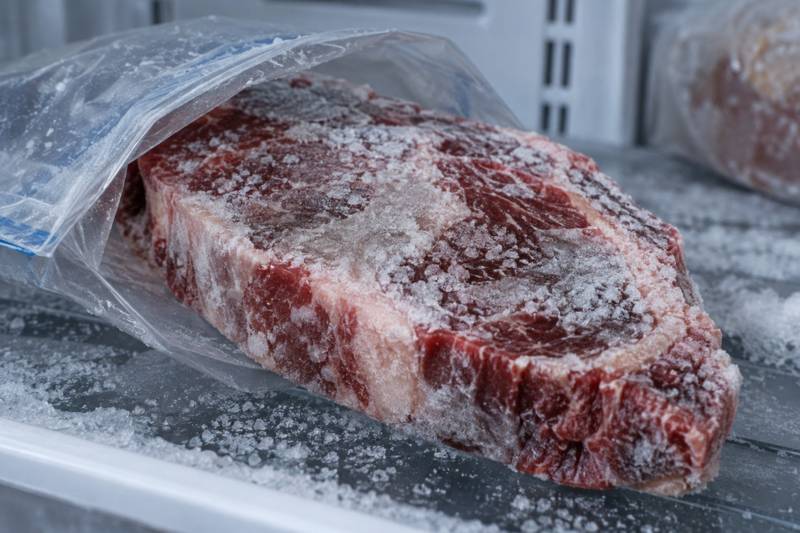
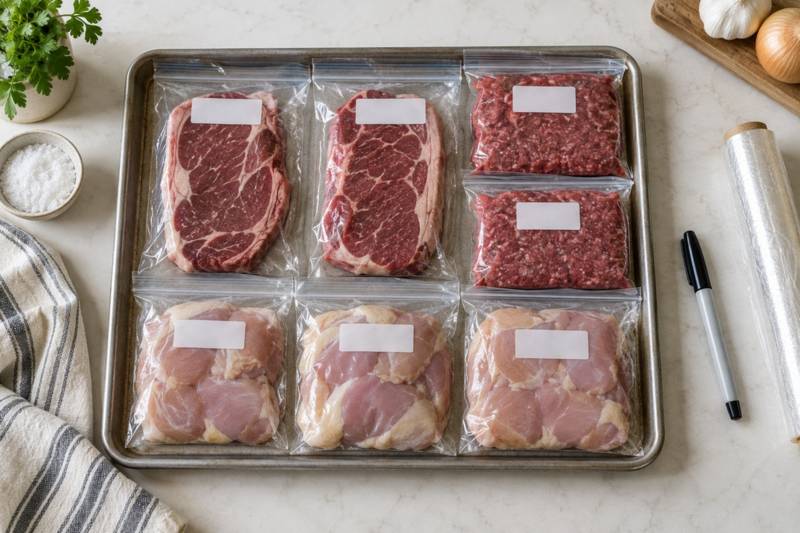
Cooked beef, chicken, pork and turkey get the same 2 hours (1 above 90°F). That includes the time a roast or ham sits on the counter after carving. Raw meat should never be left out to thaw; use the fridge, cold water or the microwave instead (see thawing).
Buffets, potlucks and picnics
Serving food for a crowd is where the 2-hour rule slips most often. FSIS advice for parties and outdoor meals:
- Keep hot food at 140°F or above in chafing dishes, warming trays or slow cookers, or leave it on the grill.
- Keep cold food at 40°F or below in the fridge, in coolers or in containers set on ice.
- Use small serving trays and replace them often instead of leaving one big platter out all evening.
- Limit how often coolers are opened, keep the lids closed and keep coolers out of direct sun.
- Watch the clock in hot weather. At an outdoor event above 90°F, perishable food that isn't kept hot or on ice has 1 hour.
Don't top up a dish that has been out for a while with fresh food; swap in a clean tray. When the party ends, divide leftovers into shallow containers so they chill fast, and use them within 3–4 days (see leftovers). Reheat them to 165°F, measured with a food thermometer.
Questions people ask
What is the danger zone for food?
40°F to 140°F (4°C to 60°C). FSIS says bacteria can double in as little as 20 minutes in that range, which is why perishable food shouldn't stay there more than 2 hours.
How long can boiled eggs sit out?
No more than 2 hours, or 1 hour above 90°F. Refrigerated, hard-boiled eggs keep 1 week.
Can cooked rice sit out overnight?
No. Cooked rice follows the 2-hour rule like other perishable cooked food; refrigerate it promptly and use it within 3–4 days.
Does reheating food that sat out make it safe?
Not reliably. Some bacteria, such as staph, form a heat-resistant toxin that cooking can't destroy, so food left out past 2 hours should be thrown out, not reheated.
Do I have to let hot food cool before refrigerating it?
No. Refrigerate it within 2 hours. Divide large batches into shallow containers so they cool quickly in the fridge.
Sources
- USDA FSIS: "Danger zone" (40°F–140°F)
- USDA FSIS: USDA urges consumers to keep clear of the danger zone this summer
- FoodSafety.gov: 4 steps to food safety
- USDA FSIS: Shell eggs from farm to table
- USDA FSIS: Leftovers and food safety
- Nebraska Extension: Will reheating food make it safe if you forget to refrigerate it?
- FoodSafety.gov: Cold food storage chart