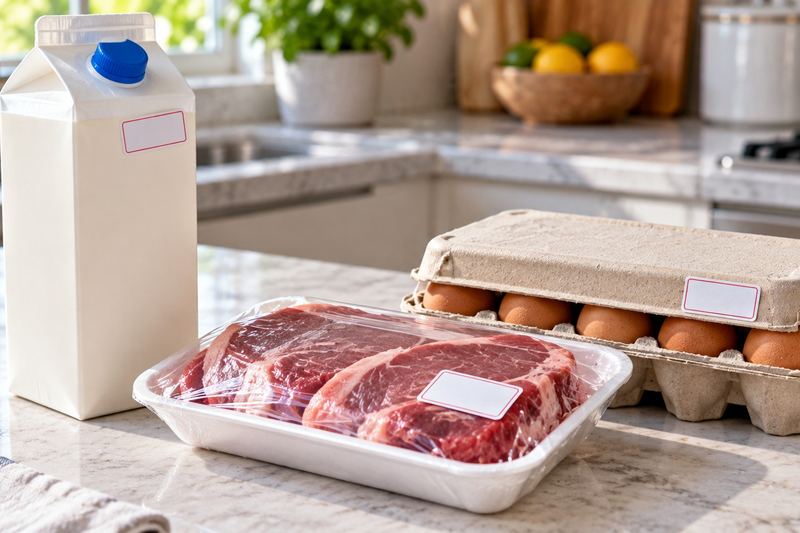
Eating raw eggs isn't considered safe. USDA FSIS and the FDA advise against raw or undercooked eggs because they can carry Salmonella, even inside a clean, uncracked shell. If a food calls for raw eggs, use pasteurized in-shell eggs or pasteurized egg products. Otherwise cook eggs until the yolk and white are firm, and egg dishes to 160°F.
Key facts
- Salmonella can get inside an egg while it forms in the hen, before the shell is made (USDA FSIS).
- CDC estimates about 1.35 million Salmonella infections a year in the US, most of them from food.
- Cook egg dishes to 160°F (71°C); cook plain eggs until both yolk and white are firm.
- Pasteurized in-shell eggs have been heat-treated to kill Salmonella and are the safer choice for raw or lightly cooked recipes.
- Higher-risk groups include young children, adults 65 and older, pregnant women and people with weakened immune systems.
Can you eat raw eggs?
You can, but federal food safety agencies advise against it. USDA FSIS recommends that no one eat raw or undercooked egg yolks or whites, and FoodSafety.gov says eating raw or undercooked eggs can make you sick. The concern is Salmonella, a bacterium you can't see, smell or taste, and that a fresh, normal-looking egg can still carry.
The risk from any single egg is low, and FoodSafety.gov notes that far fewer hens carry the bacteria inside their eggs than in the 1980s and 1990s. But some eggs are still contaminated, and there's no way to tell which ones at home. That's why the US advice is the same for everyone: cook eggs fully, or use pasteurized eggs for anything served raw.
What is Salmonella?
Salmonella is a group of bacteria that cause an illness called salmonellosis. CDC says the bacteria live in the intestines of people and animals and spread through contaminated food or water and contact with animals or their environments. CDC estimates about 1.35 million infections in the US each year and counts Salmonella among the leading causes of foodborne illness, hospitalizations and deaths. Contaminated food causes most of those illnesses; eggs are one source, and CDC names chicken as a major one.
How does Salmonella get into eggs?
FSIS and FoodSafety.gov describe a few routes:
- Inside the hen: Salmonella Enteritidis can get into the egg while it's forming, before the shell is complete, so the yolk or white can be contaminated even when the shell is perfect.
- On the shell: bacteria can get on the shell as the egg is laid or from contact with droppings afterward. Store eggs are washed and sanitized before sale, which lowers that risk.
- Through the shell: FSIS notes bacteria can enter through the shell's pores after laying, which is one reason to keep eggs cold and discard cracked ones.
Which foods contain raw eggs?
Many homemade foods use raw or lightly cooked eggs. FSIS, FDA and FoodSafety.gov name these, along with the safer approach for each:
| Food | Why it's a concern | Safer approach |
|---|---|---|
| Raw cookie dough and cake batter | Raw eggs, plus raw flour that can carry E. coli or Salmonella | Don't taste raw dough or batter; bake it first |
| Homemade mayonnaise | Made with raw yolks | Use pasteurized eggs |
| Homemade eggnog | Raw eggs if the base isn't cooked | Cook the egg mixture to 160°F, or use pasteurized eggs |
| Caesar dressing, hollandaise | Raw or barely warmed yolks | Use pasteurized eggs or egg products |
| Tiramisu, homemade ice cream | Raw or lightly cooked eggs | Use pasteurized eggs, or a custard base cooked to 160°F |
| Raw-egg shakes and drinks | Raw eggs, uncooked | Use pasteurized eggs or egg products |
| Chiffon pies, fruit whips | Raw whites folded in | FSIS says these can't be guaranteed safe; use pasteurized whites |
Some egg-white sweets are fine as traditionally made. FSIS says dry meringue shells, divinity and 7-minute frosting made with hot syrup are safe. For storing opened jars of mayonnaise, see how long mayonnaise lasts.
The FDA's warning on raw dough is about more than eggs. Most flour is raw and isn't treated to kill bacteria, and raw flour has been linked to outbreaks. The FDA says never to eat or taste raw flour, dough or batter, and not to let children play with raw dough. If you avoid eggs for other reasons, see egg substitutes for baking.
What are pasteurized eggs?
Pasteurized eggs have been heated to a temperature and for a time high enough to kill Salmonella without cooking the egg. FSIS says in-shell pasteurization must use a process FDA has accepted, and that some grocery stores sell pasteurized shell eggs. The FDA says their labels usually state that they've been treated, and they don't need to carry the safe handling statement required on untreated eggs. Look for them in the refrigerated egg case. Pasteurized liquid egg products are another option for recipes that use raw eggs.
A "Grade A" or "AA" label doesn't mean pasteurized; that's a quality grade (see brown vs white eggs). Pasteurized eggs still go in the fridge for best quality, according to FSIS.
Can you pasteurize eggs at home?
FSIS says home pasteurization isn't practical: it's very hard to heat an egg in its shell enough to kill bacteria without starting to cook it. For raw-egg recipes, buy pasteurized eggs instead.
What temperature kills Salmonella in eggs?
USDA FSIS, FoodSafety.gov and the FDA set 160°F (71°C) as the safe temperature for egg dishes without meat, such as quiche, frittata, custards and cooked eggnog bases. Egg dishes that contain meat or poultry go to 165°F. Check with a food thermometer in the center of the dish (see how to use a meat thermometer). For eggs cooked on their own, such as fried, scrambled or boiled, the rule is to cook until both the yolk and the white are firm; scrambled eggs shouldn't be runny. Full details are on egg cooking temperatures.
Are runny yolks and over-easy eggs safe?
A runny yolk hasn't been cooked to the point USDA recommends. The FDA's required carton statement for untreated eggs tells you to cook eggs until the yolks are firm, so over-easy, sunny-side-up, poached and soft-boiled eggs carry more risk than fully cooked ones. If you want runny yolks, pasteurized in-shell eggs are the safer choice. For timing firm, jammy or soft yolks, see how long to boil eggs.
Who should avoid raw and undercooked eggs?
FSIS and FoodSafety.gov list the groups most at risk of serious Salmonella illness:
- Infants and children younger than 5
- Adults 65 and older
- Pregnant women
- People with weakened immune systems, from a health condition or from medicines
For these groups especially, skip raw and undercooked eggs and use pasteurized eggs in any recipe that isn't fully cooked.
How can you prevent Salmonella from eggs?
FoodSafety.gov and FSIS recommend these steps:
- Buy eggs from a refrigerated case and keep them at 40°F or colder (see refrigerator temperature). Raw shell eggs keep 3–5 weeks (see egg storage).
- Throw away cracked eggs.
- Don't leave eggs or egg dishes out more than 2 hours, or 1 hour above 90°F.
- Wash hands, counters, utensils and cutting boards with soap and water after they touch raw eggs.
- Cook eggs until firm and egg dishes to 160°F.
Signs of Salmonella and when to call a doctor
FoodSafety.gov says most people with salmonellosis get diarrhea, fever, vomiting and stomach cramps, usually starting 6 hours to 6 days after infection and lasting 4 to 7 days. Most people recover without treatment, but the infection can be serious, especially for the higher-risk groups above. This guide can't diagnose illness: if you think you or someone in your family has food poisoning, the FDA advises contacting a health care provider. FoodSafety.gov lists signs that call for a doctor, including bloody stools, a fever over 102°F (39°C), diarrhea that doesn't improve after 3 days, vomiting for more than 2 days and signs of dehydration.
Egg recalls
Egg recalls change often, so check a live list rather than relying on news reports. FoodSafety.gov posts current FDA and USDA recalls and public health alerts. If your eggs match a notice, follow its instructions, usually returning or discarding them, and clean any surfaces they touched.
Questions people ask
Can you get Salmonella from eggs?
Yes. Eggs can carry Salmonella on the shell or inside, even when they look normal. Cooking eggs until firm, or egg dishes to 160°F, kills it.
Does cooking eggs kill Salmonella?
Yes, when they're cooked enough: until both yolk and white are firm, or to 160°F for egg dishes. Lightly cooked eggs with runny yolks may not get hot enough.
Is raw egg yolk safe to eat?
Not by USDA and FDA guidance; Salmonella can be in the yolk. Use pasteurized eggs for recipes that need raw yolks.
Is it safe to eat raw cookie dough?
No. The FDA says never to eat raw dough or batter, because both raw eggs and raw flour can carry harmful bacteria.
Where can you buy pasteurized eggs?
FSIS says some grocery stores sell pasteurized shell eggs; look in the refrigerated egg case for a label saying they've been pasteurized. Pasteurized liquid egg products are another option.