To halve a recipe, divide every ingredient by two and convert awkward results into smaller measures: half of 3/4 cup is 6 tablespoons, half of 1/3 cup is 2 tablespoons plus 2 teaspoons, and half of 2/3 cup is 1/3 cup. Half a tablespoon is 1 1/2 teaspoons. Weigh eggs and check bakes early.
Key facts
- 1 cup = 16 tablespoons = 48 teaspoons; 1 tablespoon = 3 teaspoons (NIST).
- Half a cup is 8 tablespoons, 4 fluid ounces or 118 mL.
- A third of a cup is 5 tablespoons plus 1 teaspoon (16 teaspoons, 79 mL).
- King Arthur Baking puts a large egg at about 50 g without the shell, so half an egg is about 25 g of beaten egg.
- King Arthur suggests checking a reduced bake at half the original time, then every few minutes.
How do you halve a recipe?
Write out the halved amount of every ingredient before you start, then measure from your list. King Arthur Baking recommends doing all the math at once and writing the reduced amounts down so you don't lose track halfway through. The rules that make it easy:
- Work in the smallest unit. Turn cups into tablespoons (16 per cup) and tablespoons into teaspoons (3 per tablespoon), halve, then convert back to the simplest measures.
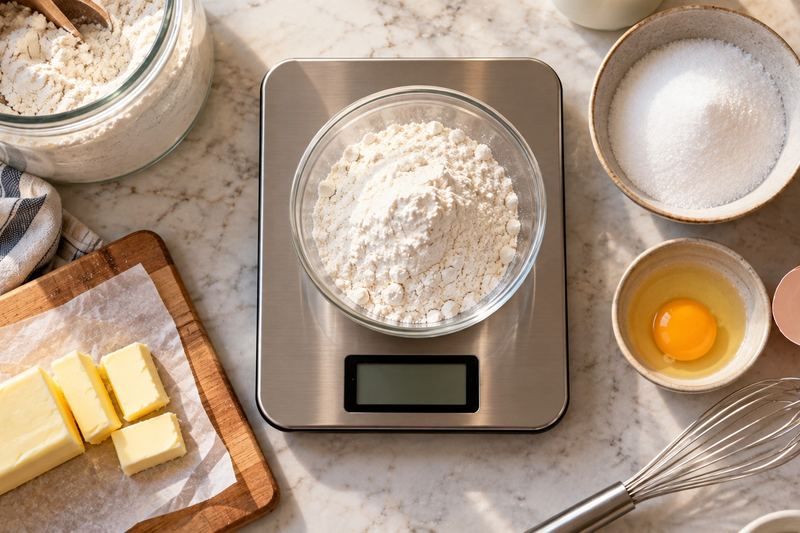
- Weigh when you can. Grams halve cleanly: 210 g of flour becomes 105 g. If the recipe gives only cups, our cups-to-grams pages give weights for common ingredients.
- Halve the eggs by weight (see below).
- Pick a smaller pan and start checking early. Temperature usually stays the same; time and pan size change.
Halving and thirding chart for cups and spoons
Every value here is exact, worked out from 1 cup = 16 tbsp = 48 tsp. Where a third doesn't land on a standard spoon, the closest practical measure is given in parentheses.
| Original amount | Half | One-third |
|---|---|---|
| 1 1/2 cups | 3/4 cup | 1/2 cup |
| 1 1/3 cups | 2/3 cup | 7 tbsp + 1/3 tsp (about 7 tbsp) |
| 1 1/4 cups | 1/2 cup + 2 tbsp (10 tbsp) | 1/4 cup + 2 tbsp + 2 tsp |
| 1 cup | 1/2 cup | 1/3 cup |
| 3/4 cup | 6 tbsp (1/4 cup + 2 tbsp) | 1/4 cup |
| 2/3 cup | 1/3 cup | 3 tbsp + 1 2/3 tsp (about 3 tbsp + 1 3/4 tsp) |
| 1/2 cup | 1/4 cup | 2 tbsp + 2 tsp |
| 1/3 cup | 2 tbsp + 2 tsp | 1 tbsp + 2 1/3 tsp (about 1 tbsp + 2 1/4 tsp) |
| 1/4 cup | 2 tbsp | 1 tbsp + 1 tsp |
| 1/8 cup (2 tbsp) | 1 tbsp | 2 tsp |
| 1 tbsp | 1 1/2 tsp | 1 tsp |
| 3/4 tbsp | 1 1/8 tsp (1 tsp + 1/8 tsp) | 3/4 tsp |
| 1/2 tbsp | 3/4 tsp | 1/2 tsp |
| 1 1/2 tsp | 3/4 tsp | 1/2 tsp |
| 1 1/4 tsp | 5/8 tsp (1/2 tsp + 1/8 tsp) | 5/12 tsp (a scant 1/2 tsp) |
| 1 tsp | 1/2 tsp | 1/3 tsp (a heaping 1/4 tsp) |
| 3/4 tsp | 3/8 tsp (1/4 tsp + 1/8 tsp) | 1/4 tsp |
| 1/2 tsp | 1/4 tsp | 1/6 tsp (a heaping 1/8 tsp) |
| 1/4 tsp | 1/8 tsp | 1/12 tsp (a scant 1/8 tsp) |
| 1/8 tsp | 1/16 tsp (half your 1/8 spoon) | 1/24 tsp (a few grains) |
What is half of 3/4 cup?
Half of 3/4 cup is 6 tablespoons, which you can also measure as 1/4 cup plus 2 tablespoons. The math: 3/4 cup is 12 tablespoons, and half of 12 is 6.
What is half of 2/3 cup?
Half of 2/3 cup is 1/3 cup. In tablespoons, that's 5 tablespoons plus 1 teaspoon.
What is half of 1/3 cup?
Half of 1/3 cup is 2 tablespoons plus 2 teaspoons. A third of a cup is 16 teaspoons, and half of that is 8 teaspoons: 2 tablespoons (6 tsp) plus 2 teaspoons.
What is half of 1/4 cup and half of 1/2 cup?
Half of 1/4 cup is 2 tablespoons. Half of 1/2 cup is 1/4 cup, or 4 tablespoons.
What is half a tablespoon?
Half a tablespoon is 1 1/2 teaspoons, about 7.4 mL. Half a teaspoon is about 2.5 mL. For the full spoon comparison, see tablespoon vs teaspoon.
How many tablespoons are in half a cup?
There are 8 tablespoons in half a cup. Half a cup is also 24 teaspoons, 4 fluid ounces and about 118 mL. By weight it depends on the ingredient: about 118 g for water, 113 g for butter (one stick), 100 g for granulated sugar and 60 g for spooned all-purpose flour, using the figures on our butter, sugar and flour pages.
| Amount | Tablespoons | Teaspoons | Fluid ounces | Milliliters |
|---|---|---|---|---|
| 1/2 cup | 8 | 24 | 4 fl oz | 118 mL |
| 1/3 cup | 5 1/3 (5 tbsp + 1 tsp) | 16 | 2 2/3 fl oz | 79 mL |
| 1/4 cup | 4 | 12 | 2 fl oz | 59 mL |
More single conversions: tablespoons in a cup, teaspoons in a cup and mL in a cup. Half of a half gallon is a quart (4 cups); see the liquid measurements chart.
How do you measure 3/4 cup or 2/3 cup without that cup?
Combine smaller cups and spoons that add up to the same volume:
- 3/4 cup: 1/2 cup + 1/4 cup, or three 1/4 cups, or 12 tablespoons.
- 2/3 cup: two 1/3 cups, or 10 tablespoons + 2 teaspoons. With only a 1/4 cup, use two 1/4 cups + 2 tablespoons + 2 teaspoons.
- 1/3 cup: 5 tablespoons + 1 teaspoon.
- 1/4 cup: 4 tablespoons.
- 3/4 teaspoon: 1/2 teaspoon + 1/4 teaspoon.
- 3/4 tablespoon: 2 1/4 teaspoons (2 teaspoons + 1/4 teaspoon).
- 2/3 teaspoon: 1/2 teaspoon + a heaping 1/8 teaspoon (close, not exact).
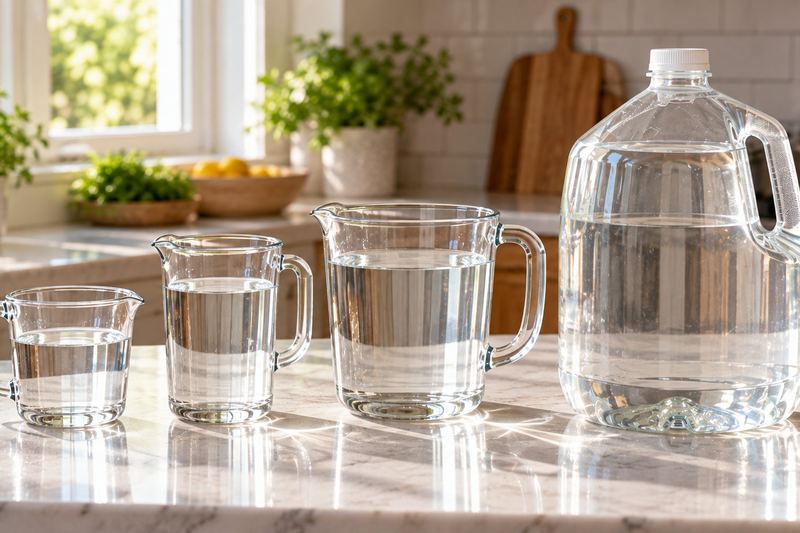
For liquids, a 2-cup liquid measuring cup marked in thirds and quarters is easier still. Our guide to dry vs liquid measuring cups explains which cup to use for what.
How do you halve an egg?
Beat the egg, weigh it, and use half. King Arthur Baking puts a large egg at about 50 g out of the shell (roughly 14 g yolk and 35 g white), so half a large egg is about 25 g of beaten egg. Weighing beats eyeballing because eggs vary: USDA's grade standards define size by minimum weight per dozen in the shell (24 oz for large, 27 oz for extra large), so two "large" eggs can differ by several grams. Cover and refrigerate the leftover half and use it soon, cooked; see how long eggs keep.
How do you double a recipe?
Multiply every ingredient by two and convert upward: double 3/4 cup is 1 1/2 cups, double 2/3 cup is 1 1/3 cups, double 1 1/2 teaspoons is 1 tablespoon. Doubling is easier math than halving because you never need fractions smaller than your spoons. For baking, a simple approach is to bake two pans of the original size rather than one oversized pan, so the depth of batter stays the same; still check doneness by the recipe's visual cues rather than the clock.
Pan size and baking time for a halved recipe
Use a pan with about half the area, and expect a shorter bake. King Arthur Baking suggests multiplying length by width to get the original pan's area, dividing by two, and choosing the pan closest to that number:
| Original pan | Area | Half area | Close match (King Arthur) |
|---|---|---|---|
| 9 x 13 in | 117 sq in | 58.5 sq in | 9-in round (64 sq in, shorter cake) or 8-in round (50 sq in) |
| 9 x 9 in | 81 sq in | 40.5 sq in | 8.5 x 4.5 in loaf pan (38.25 sq in) |
| 8 x 8 in | 64 sq in | 32 sq in | 8.5 x 4.5 in loaf pan or muffin cups |
Leave the oven temperature as written. Smaller batches can bake anywhere from 5% to 50% faster, according to King Arthur, so there's no fixed formula. Set a timer for half the original time, then check every 5 minutes or so for cakes and quick breads, every few minutes for brownies and bars, and every 1 to 2 minutes for cookies. Rely on the recipe's cues: color, a clean tester, edges pulling away from the pan. Smaller yeast doughs also tend to rise faster, so go by how they look rather than by the clock.
For a halved meat or casserole recipe, cooking time also drops, but safety is measured by temperature, not time. Check with a food thermometer and use the USDA minimums on our cooking temperatures pages; see how to use a meat thermometer.
Questions people ask
What is half of 3/4 cup?
Six tablespoons, or 1/4 cup plus 2 tablespoons.
What is half of 2/3 cup?
One-third cup, which is 5 tablespoons plus 1 teaspoon.
What is half of 1/3 cup in tablespoons?
Two tablespoons plus 2 teaspoons (8 teaspoons in all).
Is 8 tablespoons half a cup?
Yes. A cup is 16 tablespoons, so 8 tablespoons is exactly half a cup.
How many teaspoons are in half a tablespoon?
One and a half teaspoons, since a tablespoon is 3 teaspoons.
Do you halve the baking time when you halve a recipe?
Not exactly. Keep the same oven temperature, start checking at about half the original time, and use the recipe's doneness cues; King Arthur Baking says smaller batches bake 5% to 50% faster.
Sources
- King Arthur Baking: How to reduce a recipe
- USDA AMS: Specifications for shell eggs
- NIST: Handbook 44 (2024), Appendix C, general tables of units of measurement
- NIST: Guide to the SI, Appendix B.9, factors for units listed by kind of quantity
- Kansas State University Research and Extension: Cooking basics, measuring tools and how to use them